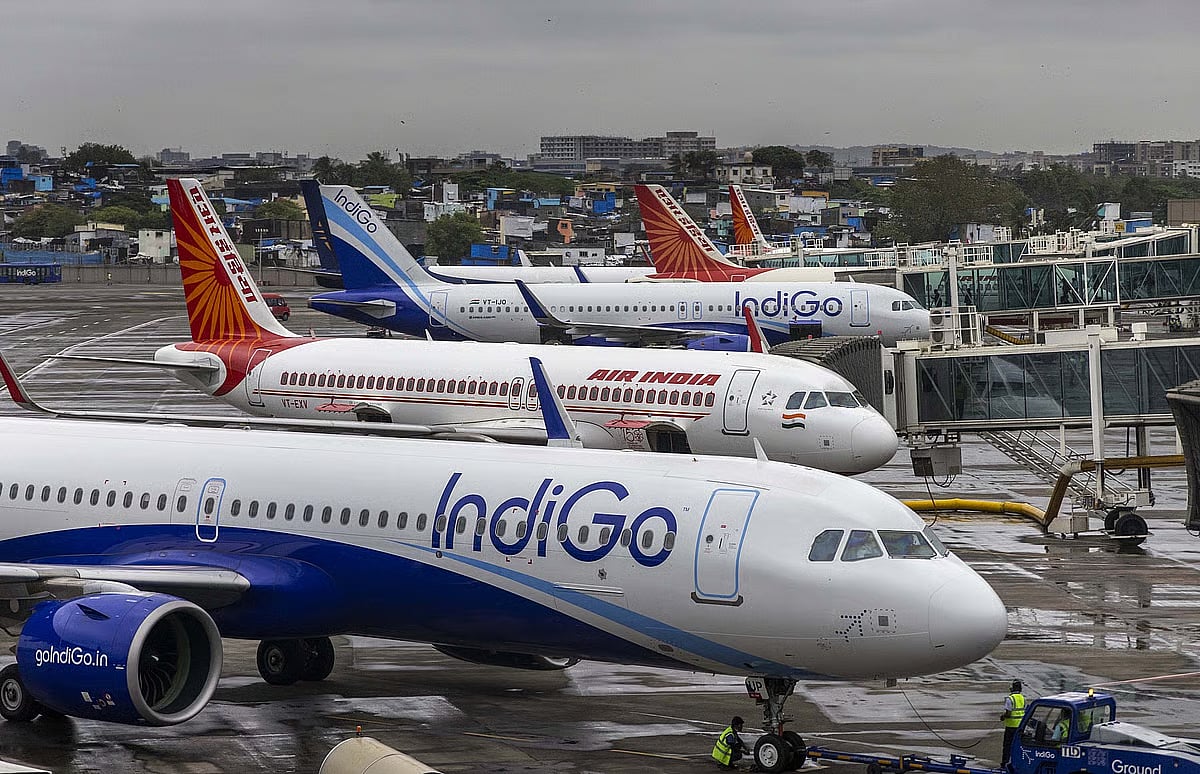
The Federation of Indian Airlines (FIA), representing major carriers including Air India, IndiGo, and SpiceJet, has formally warned the government that the Indian aviation sector is under extreme financial stress due to soaring Aviation Turbine Fuel (ATF) prices.
The FIA has requested urgent intervention, including a revision of ATF pricing mechanisms and temporary suspension of excise duty on jet fuel for domestic operations, citing the risk of widespread operational shutdowns if relief is not provided.
According to Deccan Herald, the FIA’s letter to the government highlights that the aviation industry’s dire condition has been exacerbated by the West Asia crisis, which has led to airspace closures and increased operational costs.
The letter states that ad hoc and irrational increases in ATF prices are creating severe imbalances in both domestic and international operations, rendering airline networks unsustainable.
As reported by Financial Express, the FIA noted that ATF now accounts for nearly 55-60% of total operational costs, up from 30-40% previously.
The body criticised the current pricing mechanism, stating that high refining margins and ad hoc revisions have distorted route economics, particularly on international routes where ATF prices have surged by Rs 73–75 per litre.
The FIA warned that this situation has turned several overseas routes loss-making and weakened Indian carriers’ competitiveness.
As Siasat stated in an article, the FIA has called for the government to extend a uniform fuel pricing mechanism across both domestic and international operations, as was previously done under the “crack band” system.
The federation also requested a temporary deferment of the 11% excise duty on ATF, arguing that the abnormal increase in prices, combined with rupee depreciation, has significantly amplified the financial burden on airlines.
Coverage revealed that the government had previously limited the increase in ATF price to Rs 15 per litre for domestic operations, but for international operations, the price rose by Rs 73 per litre.
The FIA stated that this disparity has made both domestic and international operations unviable, resulting in significant losses for the sector in April.
Industry sources indicated in recent analysis that airlines may consider capacity cuts after the next ATF price revision, particularly on less profitable routes. Short-haul sectors and routes with low passenger occupancy are expected to be most affected if fuel costs continue to rise.
The government has implemented some measures, such as capping the increase in ATF prices and reducing airport charges, but airlines remain cautious and are closely monitoring fuel price movements.
Further details showed through reporting that the FIA has also urged the government to reduce value-added tax (VAT) in key aviation hubs. Delhi, the country’s largest aviation hub, has the second-highest VAT on jet fuel at 25%, with Tamil Nadu at 29%.
Other major cities such as Mumbai, Bengaluru, Hyderabad, and Kolkata have VAT rates ranging from 16% to 20%, collectively accounting for over half of airline operations within India.
The FIA’s appeal also referenced the impact of the West Asia crisis, which has increased oil prices and led to airspace restrictions, further raising operational costs for Indian airlines.
The federation warned that continued volatility in ATF pricing could result in grounded aircraft, flight cancellations, and broader disruptions to connectivity and schedule stability as recent updates indicated.
Note: This article is produced using AI-assisted tools and is based on publicly available information. It has been reviewed by The Quint's editorial team before publishing.