You don’t have any Active Subscription. Subscribed with another email. Logout and Login with that one. Your active subscription(s) Account subscription benefits alongside Premium Stories, Editorials, Opinions and more.
Unlock these with Subscription Products you've access to Additional Subscription Benefits Need help with your subscription.
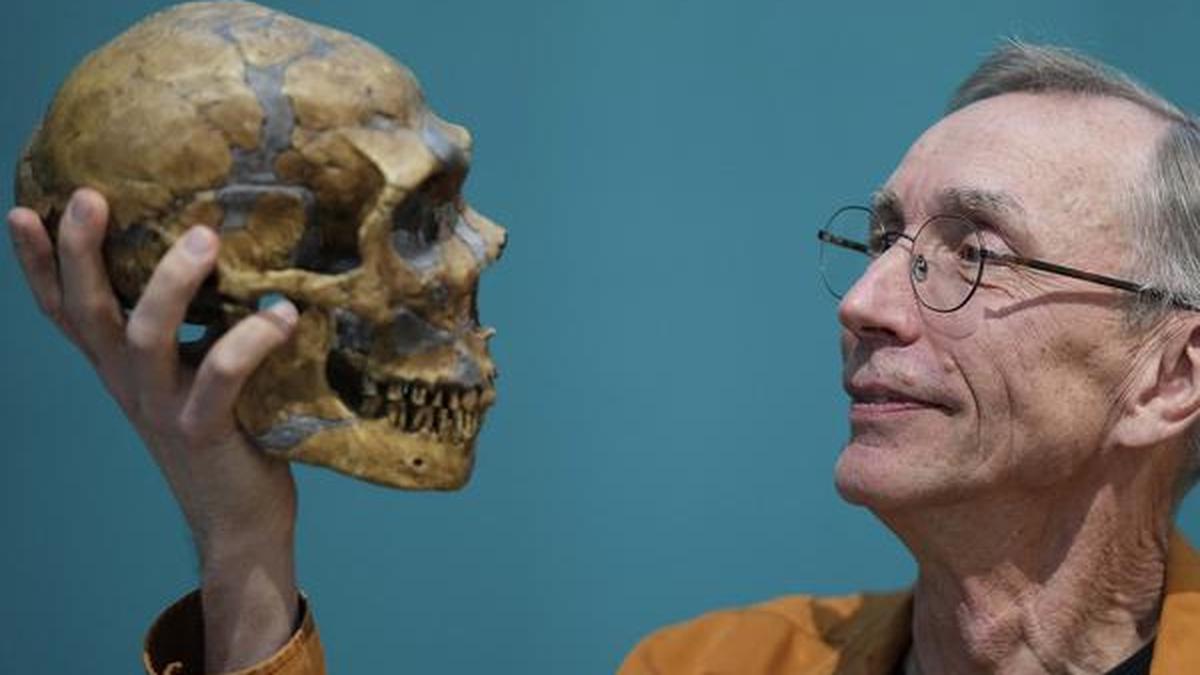
Updated - April 26, 2026 03:34 pm IST Mirror to humans: Swedish scientist Svante Pääbo poses with a replica of a Neanderthal skeleton at the Max Planck Institute for Evolutionary Anthropology in Leipzig, Germany, October 3, 2022.
| Photo Credit: AP Pursuing the mystery of how the Neanderthals went extinct, researchers from the Universities of Cambridge and of Montreal have now asserted that climate change was not the primary reason.
Instead, they have reported that Homo sapiens succeeded because of their better social connectivity whereas the Neanderthals’ populations suffered the effects of poor social connections.
The findings, published on April 1 Quaternary Science Reviews, were based on habitat suitability modelling: using algorithms to estimate where ancient humans might have preferred to live based on simulations of the climate over 60,000 years.
Published - April 26, 2026 02:17 pm IST Question Corner / research Terms & conditions | Institutional Subscriber Comments have to be in English, and in full sentences. They cannot be abusive or personal. Please abide by our community guidelines for posting your comments.
We have migrated to a new commenting platform. If you are already a registered user of The Hindu and logged in, you may continue to engage with our articles. If you do not have an account please register and login to post comments.
Users can access their older comments by logging into their accounts on Vuukle.